Shirakawa Go Day Trip From Nagoya
Tours & tickets

Hand-picked by our editors — only the best 5 experiences from 18 reviewed.

Open today 08:00–17:00
Attendance: Moderate — Summer season
Arrival before 09:30 is recommended to avoid heavy tour bus traffic.
Free cancellation Instant confirmation Mobile voucher Verified partner Book now, pay later
Tickets

Choose your ticket

Verified partners for every tour, free cancellation where available, and instant confirmation on every booking.

Hida Takayama & Shirakawa-go UNESCO Village Day Tour from Nagoya 10 hr
Guided Experience

Hida Takayama & Shirakawa-go UNESCO Village Day Tour from Nagoya

4.5 (113)
$56
per person
Instant Mobile voucher Flexible — change up to 24h

Journey through Japan's heritage regions with visits to mountain villages and historic districts

Reserve
Shirakawa-go & Takayama Day Tour from Nagoya 10 hr
Guided Experience

Shirakawa-go & Takayama Day Tour from Nagoya

4.5 (34)
$59
per person
Instant Mobile voucher Flexible — change up to 24h

Journey through Japan's mountain heritage visiting a UNESCO village and historic merchant town

Reserve

Prices from verified partners. Availability updates in real time at checkout. Free cancellation policies apply where shown.

What you'll do

Inside a tour, step by step

  1. 01 0.5h

    Arrival

    Arrive at Shirakawa-go Bus Terminal and store luggage

Highlights

What you'll see inside the attraction

The landmarks, rooms, and views travelers on this tour remember — all visible on a single visit.

Wada House

This is the largest gassho-zukuri farmhouse in the village and a designated important cultural property.

Head to head

Shirakawa-go vs Gokayama: Choosing Your Nagoya to Shirakawa Go Day Trip Destination

Shirakawa-go offers a comprehensive UNESCO world heritage experience with full infrastructure, while Gokayama provides a quieter, more secluded atmosphere that suits travelers seeking solitude. Choosing the right nagoya to shirakawa go day trip depends on whether you prioritize convenient amenities or a less crowded, rural encounter.

Feature Top pick Shirakawa-go Gokayama
Scale of village
Small concentrated settlements
Visitor traffic
Low visitor density
Accessibility from Nagoya
Requires transfer from Nagoya
Number of house museums
Limited house museum options
Authenticity feel
Preserved rural lifestyle
Nagoya to shirakawa go day trip tours
Limited tour options

Verdict: Select Shirakawa-go for comprehensive facilities and easier transit, or choose Gokayama for a more intimate look at the historical thatched-roof dwellings found in these Gifu landmarks.

How your ticket works

Book your ticket in 3 steps

  1. 01

    Book online

    Choose your ticket, select your date, and reserve in under two minutes. Secure checkout handled by our verified partner.

  2. 02

    Receive your mobile voucher

    Instant confirmation by email, with a mobile voucher you can save offline. No printing, no queuing at a collection desk.

  3. 03

    Show & enter

    Arrive at the entrance, show your voucher on your phone, and walk in. Most tickets include priority or skip-the-line access.

Plan your visit

Everything you need to know before you go

Practical details for your visit straight from our verified partners — hours, access, rules, and how to get there.

Open today · 08:00–17:00
Opening Hours
08:00–17:00
Address
1086 Ogimachi, Shirakawa-mura, Ono-gun, Gifu Prefecture 501-5627
Entry Fee
0 JPY (Free entry to the village; individual house museums charge 300-600 JPY)
Best arrival window
08:00–09:30 — Arriving early avoids peak crowd times and tour bus traffic starting around 10:00
Phone
+81-5769-6-1013
Mon
08:00–17:00
Tue
08:00–17:00
Wed
08:00–17:00
Thu
08:00–17:00
Fri
08:00–17:00
Sat
08:00–17:00
Sun
08:00–17:00
Main entrance

Shirakawa-go Bus Terminal

Shirakawa-mura, Ono-gun, Gifu Prefecture

Central arrival point for bus services

Address
1086 Ogimachi, Shirakawa-mura, Ono-gun, Gifu Prefecture 501-5627
Phone
+81-5769-6-1013

How to get there

🚆
Public transport · 2.5–3 hours · Approx 4,000–5,000 JPY (varies by operator)

Direct highway bus from Meitetsu Bus Center near Nagoya Station.

Dress code

Wear comfortable walking shoes suitable for gravel paths and sloped terrain. Layers are recommended due to temperature fluctuations in the mountain valley.

Bags & security

Coin lockers are available at the Shirakawa-go Bus Terminal for luggage storage. Large items should be stowed before starting your walking tour.

Photography

Photography is permitted in public areas, but respect the privacy of residents. Avoid taking photos inside private homes or restricted areas marked with signage.

Accessibility

The main village roads are gravel and may be difficult for some wheelchairs. The shuttle bus provides access to the Shiroyama Viewpoint, which is barrier-free.

Mobile phones

Mobile signal is generally reliable, but public Wi-Fi is limited. Download offline maps of the village area before your nagoya to shirakawa go day trip.

What to bring

  • Cash in JPY
  • Comfortable walking shoes
  • Sun protection
  • Umbrella
  • Camera
  • Small bag for trash

Not allowed

  • Fireworks
  • Drones
  • Cigarettes outside designated areas
  • Littering
  • Flash photography indoors
  • Tripods in narrow paths
  • Heavy luggage in museums
  • Off-trail access

Families & strollers

The village is stroller-friendly in main areas but can be steep when heading to viewpoints. Carry child essentials as there are no convenience stores inside the historic core.

Food & drink

Several local restaurants and stalls offer traditional Hida beef and handmade noodles. Ensure you take all trash with you as there are no public bins.

Pets

Pets are generally allowed in outdoor public areas if leashed. They are strictly prohibited inside museums and farmhouse interiors.

Good to know

As a UNESCO World Heritage site, preservation of the thatch-roof homes is paramount; please stay on marked paths. Respect that this is a living village, not a museum exhibit.

Meeting point

Where to find us

Shirakawa-go Bus Terminal

Shirakawa-mura, Ono-gun, Gifu Prefecture

Central arrival point for bus services

Get directions
Around your visit

Everything else worth knowing

Best time to go, insider tips, nearby landmarks, and the cancellation fine print — flip through to skim what matters to you.

Best time to visit

How crowds, weather, and events shift across the year.

Spring

Mild temperatures and sakura blossoms in April make for excellent walking conditions.

Summer

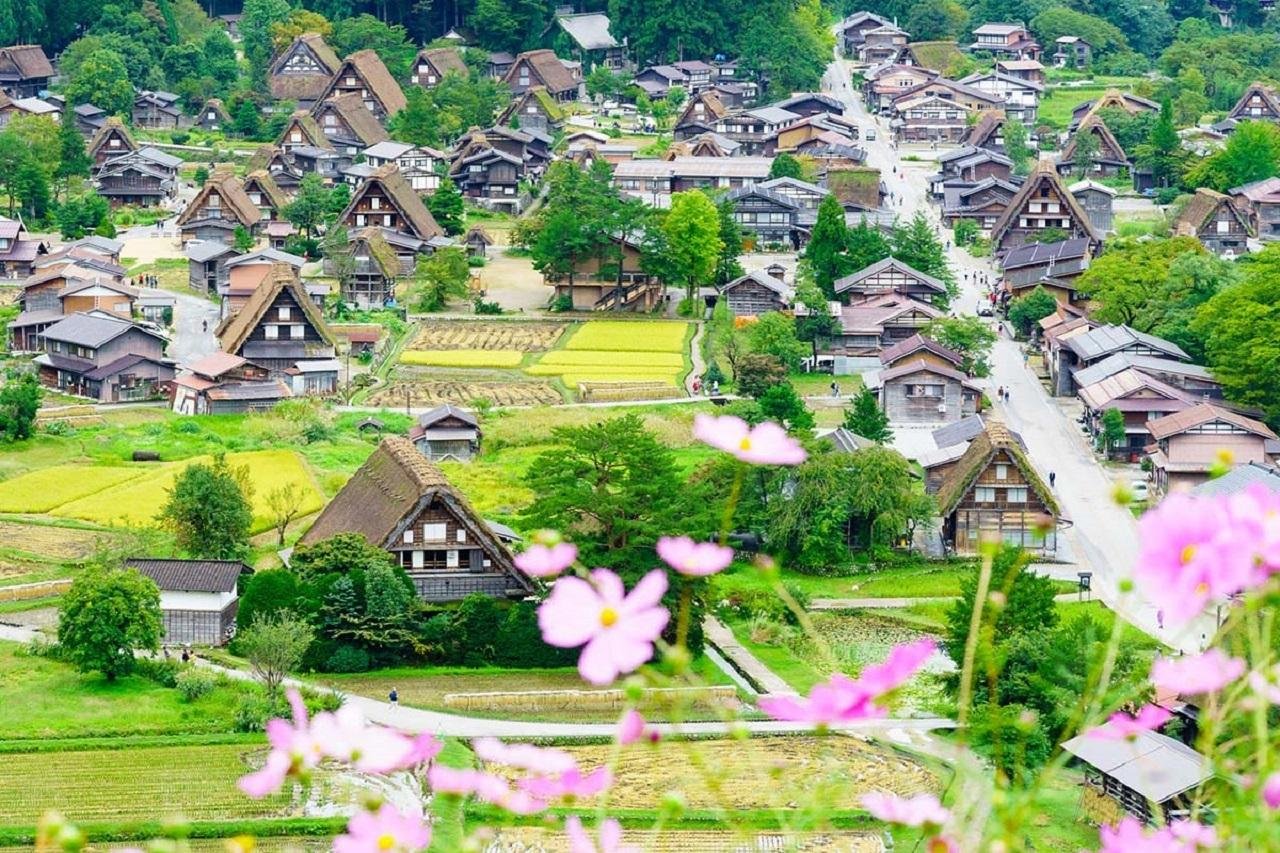
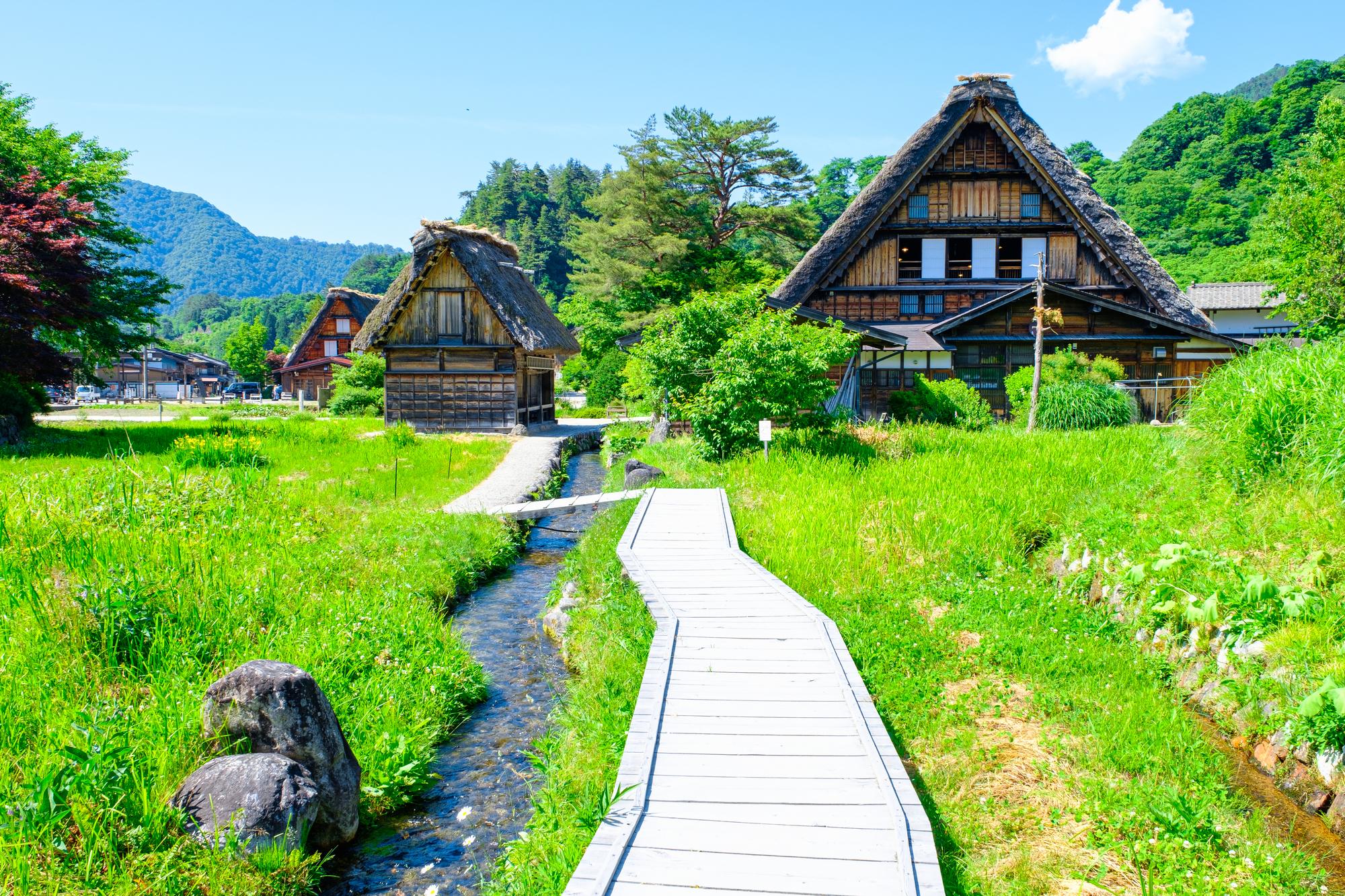
Lush green fields and clear mountain views are perfect for village photography.

Autumn

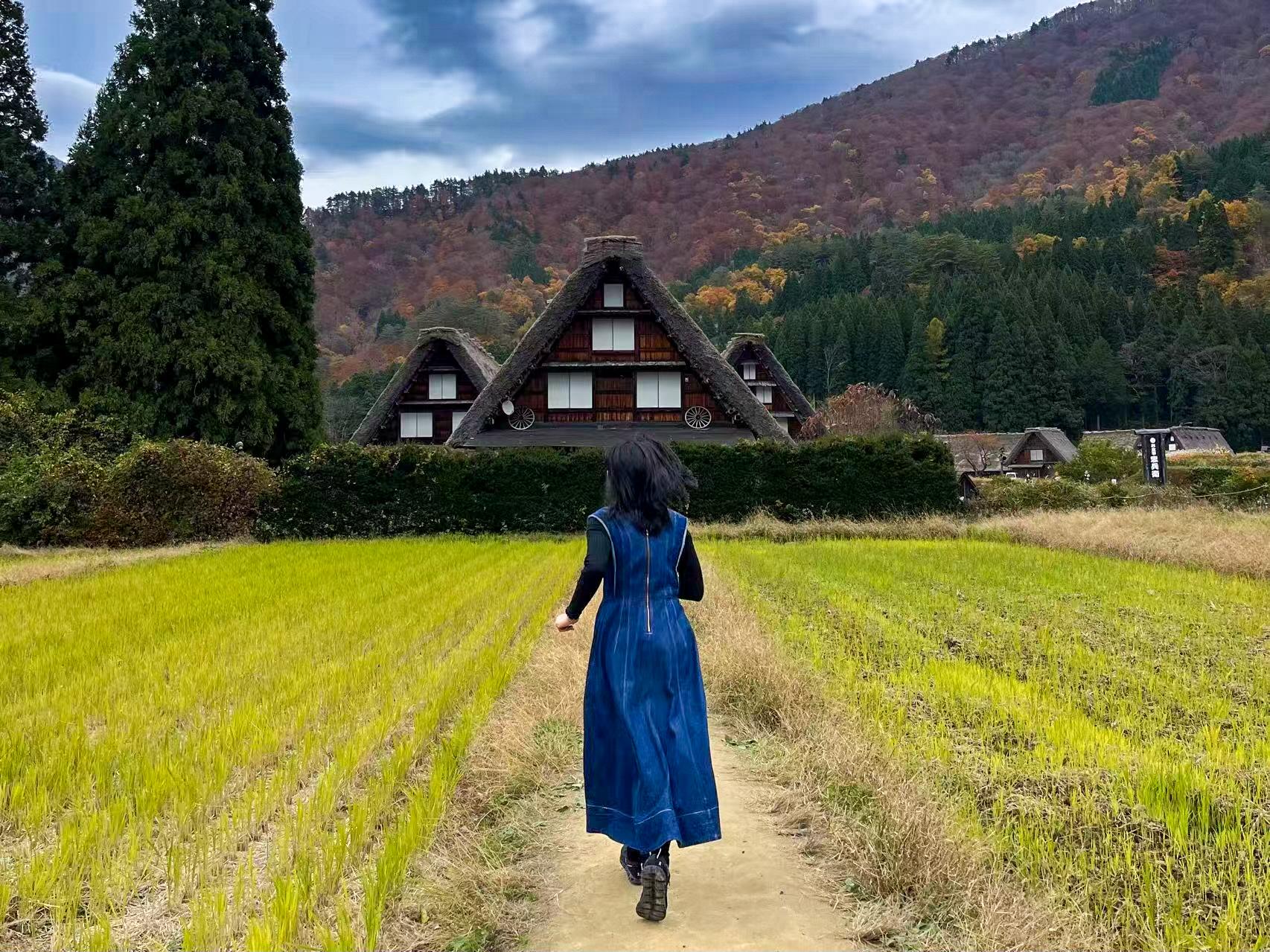
Late October brings vibrant foliage surrounding the traditional farmhouses.

Winter

Deep snow creates a unique, iconic aesthetic, though requires careful travel planning.

Helpful tips for your visit

Small details that turn a good visit into a great one.

Viewpoint Shuttle

Use the shuttle bus from near Wada House to reach the viewpoint easily.

Nearby landmarks

Non-bookable sights within a short walk — free to visit, easy to pair.

Wada House

5 min walk

The largest and most prestigious farmhouse in the village.

Cancellation policy

Flexible, no hidden fees.

As entry to the village is free, no cancellation policy applies to general access. Individual house museums may have specific policies for pre-booked group tours.

Where to stay

Hotels & districts near the attraction

Hand-picked options within walking distance — pick a district for vibe, or a specific hotel for convenience.

Ogimachi Village

5 min walk
mid-range

Stay in a traditional Gassho-style farmhouse for an authentic experience.

About

The place, in context

The 114 gassho-zukuri farmhouses standing in Ogimachi today represent a 250-year continuous adaptation to snow loads exceeding four metres each winter. Engineers studying the 60-degree thatched roofs in the 1950s discovered that the A-frame design, literally meaning "praying hands," distributes weight so efficiently that replacement timbers need resetting only every 30 to 40 years. UNESCO inscribed the village in 1995 not for age alone but for the intact social structure that still maintains communal roof-thatching rotations, a labor system documented since the Edo period. Shirakawa-go sits 600 metres above sea level in the Shogawa River valley, where geographic isolation preserved construction techniques that vanished elsewhere during Meiji-era modernization. The largest houses, including Wada-ke built in the 1800s, housed extended silk-farming families across four floors: livestock on ground level, living quarters on the second, silkworm cultivation on the third and fourth under the thatch. When the Miboro Dam flooded the lower valley in 1961, nine farmhouses were relocated upslope to Ogimachi, forming the nucleus of what became Japan's first privately conserved heritage landscape before government designation arrived decades later. Today the village operates under a 300-yen to 600-yen entry system for individual house museums while keeping the settlement itself free to walk. The Ogimachi skyline, framed by the Hakusan range to the east, draws 1.7 million visitors annually, most arriving between April and November when the Tokai-Hokuriku Expressway remains snow-free. Winter illumination events in January and February require advance lottery registration due to capacity limits set at 1,800 visitors per evening. Coach services from Nagoya cover the 160-kilometre route in approximately three hours, typically pairing Shirakawa-go with Takayama's Sanmachi Suji merchant quarter in a single-day circuit. The village opens at 08:00, and early arrivals claim the Shiroyama viewpoint before tour groups fill the hillside observation deck after 10:00. Gassho-zukuri architecture remains a living vernacular—18 farmhouses still function as family residences, their occupants bound by conservation covenants that govern everything from roof pitch to exterior paint.

"The 60-degree thatch distributes snow weight so efficiently that structural timbers need resetting only every three decades."
Your experience

What a tour day looks like

A step-by-step walkthrough of the visit — what you'll see, how long each stage takes, and the details that matter.

You board the coach in Nagoya at 08:00, crossing the Nobi Plain before the highway climbs into Gifu's mountain spine. The first stop drops you in Takayama by 10:30, where you walk the Sanmachi Suji sake breweries and morning markets for 90 minutes before the guide reconvenes the group. By 12:30 you roll into Ogimachi, and the gassho roofs fill the valley below. You walk the suspended footbridge over the Shogawa, then follow the flagstone lanes between farmhouses whose thatched eaves nearly touch the ground. Inside Wada-ke you climb steep stairs to the third floor, where silkworm trays still rest on ceiling beams, and narrow windows frame the Hakusan peaks. You have two hours in the village. Most visitors take the shuttle to the Shiroyama overlook, photograph the roofline grid from the platform, then descend to explore Kanda-ke or Nagase-ke before the 15:00 departure. The coach returns to Nagoya by 18:00, completing the 320-kilometre circuit through the Hida highlands in a single day.

Frequently asked

Frequently asked questions about nagoya to shirakawa go day trip tours

What are the opening hours for a nagoya to shirakawa go day trip?

The village is open daily from 08:00–17:00 for visitors. Please plan your nagoya to shirakawa go day trip accordingly.

Is there an entrance fee for my nagoya to shirakawa go day trip?

Village access is free, but individual museums charge 300-600 JPY. Budget accordingly for your nagoya to shirakawa go day trip.

How should I plan my nagoya to shirakawa go day trip arrival?

We recommend arriving between 08:00–09:30 to avoid peak crowds. This is the best window for any nagoya to shirakawa go day trip.

Are there lockers available for my nagoya to shirakawa go day trip?

Yes, coin lockers are available at the Shirakawa-go Bus Terminal from 08:00–17:00 for your convenience.

Can I take photos during my nagoya to shirakawa go day trip?

Yes, you are welcome to photograph the exterior of the historic houses during your nagoya to shirakawa go day trip.

Is it easy to find food on a nagoya to shirakawa go day trip?

Yes, there are several restaurants and food stalls within the village. You can enjoy local specialties during your nagoya to shirakawa go day trip.

How do I get to the viewpoint during a nagoya to shirakawa go day trip?

You can walk to the viewpoint in 15-20 minutes or take the local shuttle bus for 300 JPY.

Are there dress code requirements for a nagoya to shirakawa go day trip?

There is no formal dress code, but sturdy walking shoes are essential for exploring the village during your nagoya to shirakawa go day trip.

Can I book a nagoya to shirakawa go day trip tour online?

Yes, you can purchase tickets for bus services or guided packages to facilitate your nagoya to shirakawa go day trip.

Is the village wheelchair accessible during a nagoya to shirakawa go day trip?

The main village paths are gravel and may be challenging, but the main viewpoint has barrier-free facilities for a nagoya to shirakawa go day trip.