
English| EUR
Suggested for you
More currencies
Choose a language
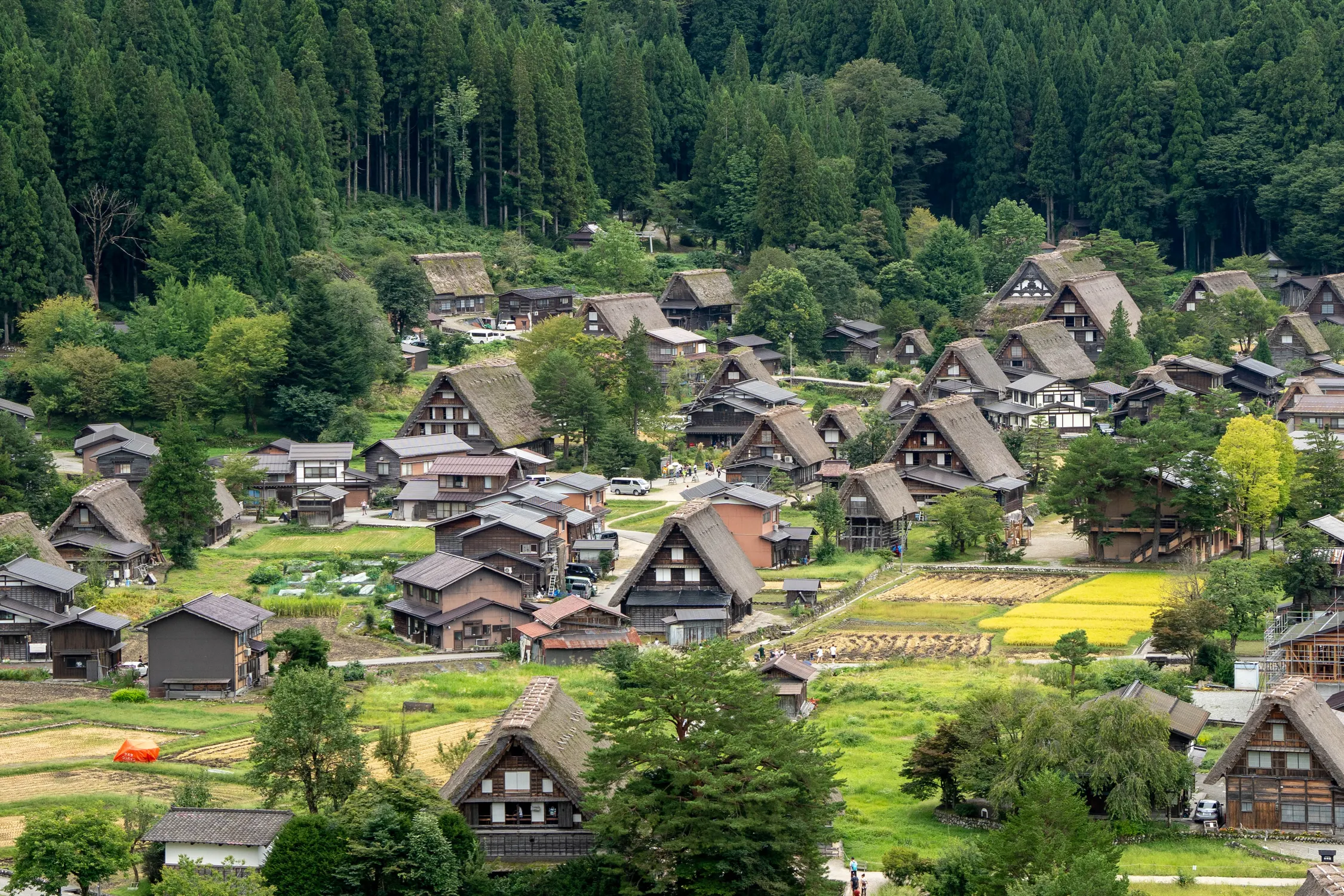
Shirakawa-go sits 150 kilometers north of Nagoya in Gifu Prefecture's remote Shogawa Valley. The UNESCO World Heritage village of steep-roofed gassho farmhouses draws day-trippers from across Chubu, but getting there requires choosing between a direct highway bus, a scenic train-and-bus combination, or driving mountain roads with limited parking.
Quick answer
The fastest route from Nagoya to Shirakawa-go is the Gifu Bus highway express, departing Meitetsu Bus Center and reaching Ogimachi in 2 hours 50 minutes with no transfers. Alternatively, take the JR Hida Limited Express to Takayama (2 hours 25 minutes), then board the Nohi Bus bound for Shirakawa-go (50 minutes). Private cars follow Route 156 north through Gujo and require winter tire equipment from December through March.
Shirakawa-go receives no rail service. The village's isolation in the Japan Alps means every visitor from Nagoya must choose between highway bus, train-plus-local-bus, or private vehicle — each with distinct tradeoffs in comfort, cost, and flexibility. The Gifu Bus Nagoya–Shirakawa-go highway route departs from Meitetsu Bus Center (connected to Nagoya Station) four times daily during peak season and twice daily in winter. Reservations open one month in advance and sell out on weekends; the 2-hour-50-minute nonstop ride deposits passengers directly at the Ogimachi bus terminal, 200 meters from the village center. This is the simplest option for those traveling from Nagoya to Shirakawa-go without a car, though return buses depart Ogimachi as early as 14:10, limiting afternoon exploration time. The JR route adds scenic value but requires coordination. Board the Wide View Hida Limited Express at Nagoya Station bound for Takayama, a castle town 60 kilometers south of Shirakawa-go. The 2-hour-25-minute train ride crosses the Hida Highlands with reserved seating recommended during autumn foliage season. From Takayama Station's adjacent bus terminal, Nohi Bus operates hourly service to Shirakawa-go (50 minutes), though the combined journey takes 3.5 to 4 hours depending on connection times. This route allows a Takayama stopover but costs approximately 30 percent more than the direct bus. Driving from Nagoya via Route 41 and Route 156 takes 2.5 hours in good conditions, but Ogimachi's four public lots fill by 10:00 on weekends and holidays. Winter driving demands studded or chained tires; Route 156 between Gujo and Shirakawa-go closes during heavy snowfall. Rental cars from Nagoya Station or Chubu Centrair Airport start at 6,000 yen per day, but parking stress and road closures make this the riskiest choice during peak periods unless departing before 07:30. Each transport option converges on the same arrival point: Ogimachi's compact village core, walkable in 90 minutes and open from 08:00 to 17:00 daily. The challenge is not reaching Shirakawa-go from Nagoya, but timing your arrival to secure parking or return-bus seats before the midday tour-group surge.
“The village's isolation in the Japan Alps means every visitor from Nagoya must choose between highway bus, train-plus-local-bus, or private vehicle — each with distinct tradeoffs in comfort, cost, and flexibility.”
Shirakawa-go is located in the Gifu Prefecture. The most efficient direct mode of transit from Nagoya is via highway bus departing from the Meitetsu Bus Center.
Gifu Bus Highway Bus from Meitetsu Bus Center to Shirakawa-go
JR Limited Express Hida from Nagoya Station to Takayama Station, then local bus to Shirakawa-go
Tokai-Hokuriku Expressway to Shirakawa-go Interchange
Arrive between 08:00 and 10:00 to beat large tour groups and secure parking before peak midday congestion.
The Shirakawa-go village is open daily for visitors. Operational hours remain consistent throughout the week to accommodate those traveling from Nagoya.
Access to the Shirakawa-go village is open to the public without a general admission fee. Individual cultural facilities, such as specific museums and historic houses, maintain their own separate entry charges.
Verdict: Most visitors pay 0 JPY for village access, with total costs depending solely on which specific museums or historic houses they choose to enter.
Prepare these items before your trip to ensure smooth travel and access to Shirakawa-go's attractions.
Everything you need to know about how to go to shirakawago from nagoya
The most common method regarding how to go to shirakawago from nagoya is by highway bus, which provides a direct link between the two locations. Travelers often choose this route for its convenience and direct access to the village terminal.
The journey typically takes approximately 3 hours by highway bus. Because you are traveling between urban Nagoya and the Gifu mountain regions, it is recommended to check specific coach schedules in advance.
Entry to the village itself is 0 JPY, meaning general access to the streets is free. Please note that individual museums and historical gassho-zukuri houses within the area may charge separate fees for interior access.
For those researching how to go to shirakawago from nagoya, the best arrival window is between 08:00–10:00. Arriving early helps you beat large tour groups and secures parking before peak midday congestion.
There is no direct train station in the village, so learning how to go to shirakawago from nagoya involves a combination of rail and bus or direct bus services. Most visitors transfer at locations like Takayama or Kanazawa if they are utilizing the Japan Rail Pass.
As a protected mountain settlement, the site requires visitors to respect local paths and residential privacy. Comfortable walking shoes are recommended for exploring the steep slopes and gravel paths that connect the traditional thatched-roof structures.
Nagoya to Shirakawa-go Bus Guide
Read more GuideWhere to Stay Near Shirakawa-go
Read more GuideShirakawa-go Entrance Fees and Costs
Read more Tickets & toursNagoya to Shirakawa-go Day Trips
Read more Tickets & toursNagoya to Shirakawa-go Bus Tours
Read more Tickets & toursNagoya to Shirakawa-go Private Tours
Read more